Showing posts with label elementary school. Show all posts

Wednesday, November 30, 2022

4 Excellent Elementary School Montessori Science Activities

4 Excellent Elementary School Montessori Science Activities


It is important for elementary school children to understand the science of the world they live in. Science is everywhere and affects almost every aspect of our lives in some way. To get children started on a discovery of science, these 4 simple experiments are easy, inexpensive, and offer valuable practical experience.

1. Cooking Chemistry

The kitchen is the perfect lab for teaching some basic chemistry concepts to Montessori elementary school students. Measuring and pouring help them learn about fractions, multiplication and division, and even concepts like ratios when the recipe size needs to be adjusted. But the chemistry that takes place in the kitchen is amazing and ranges from simple things like turning water into steam to more involved discoveries about the way chemicals mix to create new substances.

2. Rubberized Chicken Bones

A popular Montessori-inspired science experiment is to tie a knot in a chicken bone. All you need is a well-washed bone and a resealable container of vinegar. Put the bone in the container and let it sit for a few days. The bone will begin to bend a little when pressure is applied to the ends in about 3 days, and will become more supple after 7 to 10 days.
 

3. Salt and Ice

When salt is applied to water ice, it causes the ice to melt. This technique is commonly used in northern parts of the country but children who live in warmer climates may never be presented with an example outside of a classroom. All you need is some ordinary table salt, some ice cubes, and bowls to contain the melted cubes. Experiment with using more or less salt, timing how long the process takes, and explore the science of why it happens.

4. The Winter Solstice

The shortest day of the year is December 21. Before that day on the calendar, the days have been getting a couple of minutes shorter since June, and after it, they will grow longer until June rolls around again. It can be difficult to experiment with exactly when each day ends, but simple observations and making notes in a journal can illustrate how it gets dark earlier and earlier. Another simple device, the sundial, needs to take the solstices into consideration in order to provide a reliable measure of time.

Every child deserves to experience the magic of science, even if it is only for the magic itself.

Science has made every advancement of modern man possible and continues to make our lives better in many ways. The more exposure kids have to scientific theory, the more they can explore the universe.
Wednesday, August 31, 2022

4 Reasons Active Outdoor Time Expands Your Elementary School Child's Potential

4 Reasons Active Outdoor Time Expands Your Elementary School Child's Potential


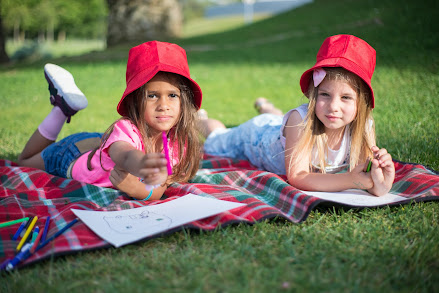
All elementary school children benefit from spending time outside. Whether the child is wrapped up in solitary observations or taking part in group or team activities, getting outside makes them healthier, happier, and better equipped for the life ahead of them. The natural world even assists in teaching math, language, and a stronger vocabulary.

Physical Activity

Running, jumping, climbing, and throwing are important physical skills that are improved with practice. Active outdoor time allows Montessori elementary school students to flex muscles, improve coordination, and promote the development of critical thinking skills, math concepts, and more in the process. To provide a single example, throwing a ball requires strength, dexterity, and the ability to calculate distance, wind speed, and other factors subconsciously.


Healthy Exercise

Exercise does more than build stronger bones and muscles. Exercise promotes a healthy body, including things like a healthy heart rate, maintaining acceptable blood pressure, and improved lung function. Exercise is good for the whole body, and children who do not get enough exercise struggle with the potential of many types of maladies that include diabetes, obesity, and susceptibility to allergens. Aerobic exercise has been proven to benefit blood flow, but it also causes endorphins to be released into the bloodstream which promotes a better mood and improves mental focus.


Social Interaction

Playing together is great for muscular development, but it is also a critical part of developing strong social skills that will have a permanent effect on children as they get older. Learning to share, working as a team, and negotiating are all social skills that take place during active outdoor activities, and all three are necessary for the development of leadership skills.

Creative Discovery

An open field or a clump of trees are both sources of a wealth of nature-based educational opportunities. Learning to plant vegetables, collecting ripe fruit, and learning what types of insects are found in different biomes use the natural world for scientific instruction, and these activities help children learn to develop the bounty and complexity of nature as they learn. Maria Montessori recognized that children learn readily from nature, and outdoor activities have been a vital part of the Montessori Method since its original conception.

It is true that children should take part in a wide range of outdoor activities, but getting aside and doing anything at all is a good place to start. There is no limit to the number of ways that children can apply outdoor time, and every one of them provides benefits that positively affect the body, the mind, their attitude, and how well they can interact with others.

Friday, July 29, 2022

Montessori Elementary School and Its Influence

Montessori Elementary School and Its Influence


In 1907, Maria Montessori opened the first Casa de Bambini, or Children's House. Since then, Montessori education has spread around the planet and is now used in thousands of schools on every continent. From daycare to middle school and beyond, Maria Montessori has left a lasting legacy that is slowly changing how children are taught.

Hands-On Learning

Private middle school uses hands-on activities as the primary form of instruction. These activities are engaging and self-correcting, allowing children to build confidence and self-esteem by correcting their own mistakes. Play-based learning is gaining popularity in more traditional educational systems today, but it has always been a critical aspect of the Montessori Method.

Child Centric Development

The children themselves, not the subject being taught, are always at the forefront of the Montessori Method. From developing fine and gross motor skills to helping children develop strong language and writing skills, the focus is on each child, not on keeping the whole class working on the same lesson at the same time.

Discipline Without Punishment

Montessori does not use threats or physical punishment to maintain discipline. Instead, children learn that appropriate behavior is valued, and straying from that behavior results in unwanted consequences such as going into timeout, being left out of engaging group activities, and more. Children learn to act in preferential ways because they want to be meaningful members of the group, not because they are afraid of being punished.
 

Leadership Through Confidence

At the heart of the Montessori Method is a child who is self-confident, aware of how their actions affect others, and personally invested in their own educational progress. Maria Montessori recognized that children who feel good about themselves are more willing to do good things for others, take risks, and apply themselves to solving problems and reaching goals.

A Dynamic Triad

There are 3 major factors in Montessori education. The first and most important part is the child, but the adults-- generally parents and educators-- form an equally valuable aspect. The triad is rounded out through a carefully prepared environment that regulates activities and guides progress without hampering the individual freedoms of the children it serves. To be successful, the Montessori Method requires all 3 aspects to be present and work in unison for the good of the individual child.

Not every aspect of the Montessori Method is available in traditional schools and the name Montessori is not trademarked. Before you enroll your children in a school that claims to be Montessori, take the time to verify that you are working with an authentic Montessori facility.