Showing posts with label montesorri kindergarten. Show all posts

Monday, November 27, 2023

Simple December Craft Ideas That Build Self-Confidence in Kindergarten

Simple December Craft Ideas That Build Self-Confidence in Kindergarten


As December unfolds, the holiday season offers an opportune time for Montessori kindergarten children to engage in simple yet enriching craft activities that celebrate the festive spirit and build self-confidence. These five December craft ideas are designed to nurture creativity and build self-confidence.

Snow Globe Ornaments

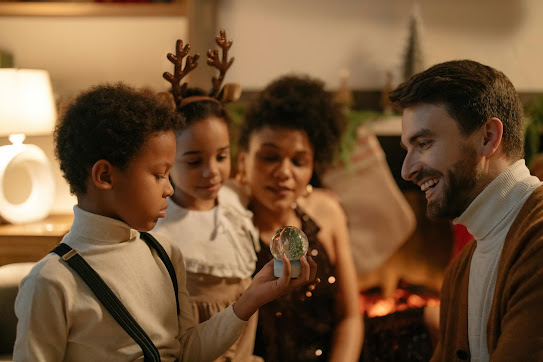
Snow globe ornaments offer a magical craft activity that allows Montessori kindergarten children to create their miniature winter wonderlands. This project not only introduces them to the concept of snow globes but also provides a tangible result they can proudly display.

Implementation:

  • Materials Needed - Clear plastic or glass ornaments, white paint or fake snow, small holiday-themed figurines, ribbon, and glue.
  • Instructions - Have children decorate the inside of the ornament with white paint or fake snow. After it dries, place a small holiday figurine inside, glue the ornament shut, and decorate the outside with ribbon.

Learning Outcomes:

  • Spatial Awareness - Assembling the miniature scene inside the ornament enhances spatial awareness.
  • Displaying Creativity - Children take pride in creating tangible, decorative items for display.

Reindeer Headbands

Crafting reindeer headbands provides Montessori children with the opportunity to make festive wearable art that showcases their creativity. This simple craft engages both fine motor and imaginative skills.

Implementation:

  • Materials Needed - Brown construction paper, googly eyes, red pom-poms, and glue.
  • Instructions - Help children trace and cut out antlers from brown construction paper. Then, attach the antlers, googly eyes, and a red pom-pom for the nose to create reindeer headbands.

Learning Outcomes:

  • Fine Motor Coordination - Tracing and cutting contribute to fine motor skill development.
  • Pride in Personalized Accessories - Children proudly wear their self-made headbands, showcasing their creative efforts.

Winter Collage Art

Winter collage art allows kindergarteners to explore their creativity through a variety of materials, fostering self-expression. This open-ended craft encourages children to experiment with different textures and shapes.

Implementation:

  • Materials Needed - Magazines, colored paper, cotton balls, glue, and markers.
  • Instructions - Provide a variety of materials and encourage children to create winter-themed collages. They can cut out pictures from magazines, tear paper into shapes, or glue cotton balls to represent snow.

Learning Outcomes:

  • Creative Expression - Collage art allows children to express themselves using a variety of materials.
  • Individualized Artwork - Each child's collage is a unique representation of their creative choices, fostering a sense of individuality.
These simple December craft ideas provide kindergarten children with opportunities to express themselves creatively while building confidence in themselves. Each activity engages young learners in a joyful exploration of the holiday season.

4  Important Reasons It is Critical to Promote Retention Over Winter Break

4 Important Reasons It is Critical to Promote Retention Over Winter Break


As winter break approaches, the allure of relaxation and holiday festivities often takes center stage. However, maintaining academic momentum during this time is crucial for students' continued success. Promoting retention over winter break not only reinforces previously learned concepts but also sets the stage for a smoother transition back into the Montessori kindergarten.

1. Upholding Educational Gains

One of the primary reasons to promote retention over winter break is to prevent learning loss. Extended breaks can lead to a decline in academic skills and knowledge, commonly known as the "summer slide" when referring to longer breaks. By engaging in educational activities, reviewing materials, or participating in targeted exercises, Montessori students can combat this decline and return to school with their educational gains intact.

2. Positive Reinforcement

Retaining knowledge over the winter break contributes to students' confidence and motivation. When students realize they remember and understand previously learned material, it fosters a sense of accomplishment and reinforces their belief in their academic abilities. This positive reinforcement can be a powerful motivator for continued engagement and success in the Montessori classroom.

3. Facilitate a Smooth Return to Learning

The period immediately following winter break can be challenging for students as they readjust to the academic routine. Promoting retention over the break helps ease this transition. Students who have engaged in educational activities are better prepared to resume their studies, as they have maintained a mental connection with the material.

4. Instill a Growth Mindset

Promoting retention over winter break contributes to the development of lifelong learning habits. By instilling a growth mindset that values continuous learning, students are more likely to approach their education with curiosity and enthusiasm. Consistent engagement in educational activities during breaks fosters the belief that learning is a year-round endeavor to:
  • Encourage Curiosity - Inspire students to explore topics that genuinely interest them.
  • Connect Learning to Real Life - Demonstrate how academic concepts relate to real-world situations.
  • Create Lifelong Learners - Students develop a mindset that values learning beyond the classroom setting.
Promoting retention over winter break is a strategic investment in students' academic success and overall learning habits. By addressing the potential for learning loss, building confidence and motivation, facilitating a smooth return to learning, and nurturing a growth mindset, educators and parents can contribute to the sustained educational momentum of students. Winter break then becomes not only a time for rest and celebration but also an opportunity to reinforce the foundations of knowledge and foster a lifelong love for learning.

Monday, September 25, 2023

How Can Parents Help Private Kindergartners Develop Effective Self-Regulation?

How Can Parents Help Private Kindergartners Develop Effective Self-Regulation?


Private kindergarten is a critical stage in a child's development, and the ability to self-regulate is a fundamental skill that sets the foundation for future academic and personal success. Parents play a pivotal role in helping their private kindergartners develop effective self-regulation. Consider the following effective strategies that support this crucial aspect of their growth.

Model and Teach Emotional Awareness

Emotional awareness is the cornerstone of self-regulation in Montessori kindergarten. Parents can start by modeling emotional intelligence themselves. Discuss your own emotions and how you manage them in various situations. Share stories about your feelings and experiences, emphasizing the importance of recognizing and expressing emotions. It is important to encourage your kindergartner to do the same. Ask questions like, "How are you feeling right now?" or "Can you tell me why you're feeling this way?" This fosters self-awareness and helps them understand that it's okay to have emotions.

Establish Predictable Routines and Boundaries

Consistent routines and clear boundaries provide a sense of security and help children understand expectations. Create a daily schedule that includes designated times for activities like homework, play, and bedtime. Explain the importance of following routines and how they help them manage their day.
Be firm yet nurturing when it comes to boundaries. Kindly enforce rules and consequences while explaining the reasons behind them. You should also encourage your kindergartner to take responsibility for specific routines, such as tidying up their toys or getting ready for bed. This fosters a sense of independence and reinforces the concept of self-regulation.

Promote Problem-Solving and Decision-Making

Problem-solving and decision-making are vital components of self-regulation. Encourage your kindergartner to think critically and make choices independently whenever possible. Present them with age-appropriate dilemmas and ask open-ended questions to guide their decision-making process.

When conflicts arise, involve your child in finding solutions. Ask questions like, "How do you think we can resolve this issue?" This collaborative problem-solving approach empowers them to take an active role in managing conflicts and making choices.

Additionally, praise your kindergartner for their efforts in self-regulation. Celebrate their successes and acknowledge their progress. Positive reinforcement boosts their confidence and motivation to continue developing these essential skills.

Helping private kindergartners develop effective self-regulation is a collaborative effort between parents and children. By modeling emotional awareness, establishing predictable routines and boundaries, and promoting problem-solving and decision-making, parents provide valuable guidance and support. These strategies empower kindergartners to navigate their emotions, make choices, and develop the self-regulation skills needed for a lifetime of success and well-being.

Thursday, July 27, 2023

4 Time-Proven Tips for Developing a Successful Kindergartner

4 Time-Proven Tips for Developing a Successful Kindergartner


Private kindergarten is a critical time in a child's development, setting the foundation for their academic journey and fostering essential life skills. As parents and educators, we play a crucial role in nurturing and supporting our kindergartners to become successful learners and individuals. Let's look at four time-tested tips that contribute to the development of successful kindergartners, fostering a love for learning and preparing them for future academic achievements.

1. Encourage a Love for Reading

Instilling a love for reading is one of the most significant gifts we can offer our kindergartners. Surround them with age-appropriate books and read together regularly. Make reading an enjoyable and engaging experience, by using expressive voices and asking questions about the story. As Montessori kindergarten students develop a love for reading, they strengthen their language and communication skills while developing a habit of exploring the world through literature.

2. Promote a Growth Mindset

Encourage a growth mindset in your kindergartner by praising effort, perseverance, and the willingness to learn. Emphasize that mistakes are an essential part of the learning process and that intelligence can be developed through dedication and hard work. By nurturing a growth mindset, children become more resilient, confident in their abilities, and open to taking on new challenges in their academic and personal lives.

3. Create a Prepared Environment

Establish daily routines that provide predictability and stability, as these help children feel secure and ready to learn. Set up a designated study area at home with all the necessary supplies, fostering a sense of responsibility and organization. Be actively involved in your child's education, showing interest in their schoolwork and offering support whenever needed.

4. Social and Emotional Development

Academic success is closely intertwined with social and emotional development. Encourage your kindergartner to engage in age-appropriate social interactions, teaching them the value of empathy, cooperation, and conflict resolution. Help them identify and express their feelings effectively, fostering emotional intelligence. A child who feels emotionally supported is more likely to be engaged in their studies and exhibit positive behaviors in the classroom and beyond.

Developing a successful kindergartner is a rewarding journey that requires dedication, patience, and a nurturing environment. By encouraging a love for reading, promoting a growth mindset, creating a structured and supportive environment, and emphasizing social and emotional development, we lay the groundwork for a successful academic future. These well-established tips not only foster essential skills and knowledge but also nurture the joy of learning, curiosity, and self-confidence in our kindergartners.

Sunday, April 30, 2023

3 Examples of Applying the Montessori Method in Private Kindergarten

3 Examples of Applying the Montessori Method in Private Kindergarten


The Montessori method is a child-centered educational approach that emphasizes independence, freedom within limits, and hands-on learning. Many private kindergartens have adopted the Montessori method to provide a unique and effective learning experience for young children. Here are three examples of applying the Montessori method in private kindergarten.

Mixed-Age Classrooms

Montessori kindergartens typically have mixed-age classrooms where children between the ages of three to six learn together. This approach allows older children to act as mentors and leaders while younger children learn from them. Mixed-age classrooms promote collaboration, socialization, and the development of leadership and communication skills.

Individualized Learning

The Montessori method emphasizes individualized learning, where children are encouraged to learn at their own pace and focus on subjects that interest them. In a private Montessori kindergarten, children have access to a wide range of materials and activities that they can choose from based on their interests and abilities. This approach fosters independence, self-motivation, and a love of learning. Individual curriculums have another advantage as well, because they allow the teacher to provide more attention to children who are struggling while the rest of the class continues with what they are doing.

Hands-On Learning

Montessori kindergartens place a strong emphasis on hands-on learning, where children learn through exploration and discovery. In a private Montessori kindergarten, children have access to a wide range of hands-on materials such as puzzles, blocks, and manipulatives that help them learn math, language, and other subjects. Hands-on learning promotes creativity, problem-solving, and critical thinking skills.

Benefits of Montessori Method in Private Kindergarten

Applying the Montessori method in private kindergarten can provide several benefits for young children, including:

  • Developing Self-Confidence

The Montessori method fosters a sense of independence and self-confidence in children, which helps them become more self-reliant and capable learners.

  • Enhancing Social Skills

Mixed-age classrooms and individualized learning in Montessori kindergartens promote socialization, collaboration, and the development of leadership and communication skills.

  • Encouraging a Love of Learning

The Montessori method emphasizes hands-on learning and individualized instruction, which helps children develop a love of learning and a sense of curiosity about the world around them.

Applying the Montessori method in private kindergarten can provide a unique and effective learning experience for young children. Mixed-age classrooms, individualized learning, and hands-on learning are just a few examples of how the Montessori method can be applied in private kindergarten to promote independence, socialization, and a love of learning. If you are considering a private kindergarten for your child, a Montessori kindergarten may be a great option to consider.

Tuesday, February 28, 2023

5 Popular Reasons to Encourage Cultural Diversity in Kindergarten

5 Popular Reasons to Encourage Cultural Diversity in Kindergarten


Encouraging cultural diversity in private kindergarten can have many positive benefits for children. Here are five popular reasons to encourage cultural diversity in kindergarten, along with a brief explanation of why that reason is important.

Promotes Understanding and Respect

Exposure to different cultures can help Montessori kindergarten children develop a greater understanding and respect for other people and their beliefs. This can lead to more empathy and acceptance of diversity in all aspects of life. Montessori is a multinational teaching method and incorporates diversity into its programs.

Broadens Perspectives

Examining different cultures can also broaden children's perspectives and help them see the world from different angles. This can lead to a more inclusive and well-rounded perspective on life. In many ways, teaching cultural diversity encourages the exploration of science, art, and language.

Enhances Social Skills

When Montessori children are exposed to different cultures, they have the opportunity to interact with people from different backgrounds. This can enhance their social skills and help them develop the ability to communicate effectively with people from diverse backgrounds.

Builds Global Awareness

Encouraging cultural diversity in kindergarten can help children become more aware of global issues and developments. This can help them understand their place in the world and become more aware of the challenges and opportunities that exist beyond their own community. Even if the only demonstration is that a favorite food came from a specific place on the map, the lesson has still conveyed the importance of understanding other places and cultures.

Supports Language Development

Exposure to different languages and cultures can also support children's language development. Bilingual or multilingual children are better able to communicate with people from diverse backgrounds, and they may have more opportunities in the future because of their language skills. Because of the global nature of the world today, many languages have adopted words or terms from other languages-- a transmission of language that has been going for as long as people have roamed the planet.

Encouraging cultural diversity in kindergarten can have many positive benefits for children, including promoting understanding and respect, broadening perspectives, enhancing social skills, building global awareness, and supporting language development. Parents and educators can help foster cultural diversity by exposing children to different cultures, traditions, and beliefs and encouraging them to learn more about the world around them.

Friday, December 30, 2022

4 Private Kindergarten Activities That Promote Inclusion and Diversity

4 Private Kindergarten Activities That Promote Inclusion and Diversity


 It is important for every private kindergarten child to feel like part of the class, family, or group. Being included makes them feel better about themselves, especially when it gives them the opportunity to share experiences and activities. From working together to discovering how we are all the same to exploring foods and customs from around the world, activities that promote diversity and inclusion can take many shapes.

1. Team Activities


Montessori kindergarten activities that involve working in pairs or groups gives every child an opportunity to be part of something larger than themselves. Working with other children gives each child some insight into communication, teamwork, and accepting the differences of others. Everyone excels in different ways, and we should be as accepting of others as we want them to be for us.

2. One Human Family


Underneath the culture and geography, we are all just parts of one human family. Like snowflakes, no human beings are exactly alike, but every child has a lot in common with all the others. Just like everyone in the immediate family has different traits, children can use the family model to begin understanding differences in physical abilities, races, and everything else. We are all different, but we are also all the same.
 

3. Foods and Cultures


People come from all over the world, and their geographic origins determine cultural customs, belief systems, and the kinds of foods they eat. Learning about the origins of fruits or food is a good introduction to how every corner of the globe contributes to the things we enjoy.
Leaf Analogies

Nature can be used to demonstrate diversity and inclusion. Start with leaves from the same tree and take note of how each one differs from the others. Next, expand the analogy leaves from different trees, and then look at the leaves of flowers, shrubs, and other growing things. Each one is different from every other one, varying in size, shape, and color. It takes all of the trees to fill the forests of the world, and every one is uniquely suited for the purpose it was meant to fulfill.

Children can see the physical attributes of different races, but they don't know anything about prejudice unless they learn it from someone else. By making diversity an important part of the classroom experience, kids can be guided toward a better, more peaceful world where everyone is on the same team and share the same goals for the future of mankind.

Tuesday, November 29, 2022

Teaching Kindergarteners About the Benefits of Giving Back During Holidays

Teaching Kindergarteners About the Benefits of Giving Back During Holidays


Giving helps kindergarten children feel good about themselves and those around them. During the holidays, the bustling activity and exciting festivities are perfect opportunities to practice grace and courtesy by taking the time to give a little more of themselves to others.

Random Acts of Kindness

We are all familiar with the warm feeling we get when we do something to help another person. For Montessori kindergarten children, offering to help other people-- including picking up an item someone dropped, offering to help carry packages, etc-- will give them that great emotional boost. Whatever the kind act may be, giving without asking builds self-esteem and earns respect.

Household Helpers

Young kids like to feel like they are a functioning part of the family, and helping with various tasks during the busy holiday season is a great way to include them in family life. Helping with measuring, pouring, and stirring in the kitchen is both helpful and educational. There are a lot of things going on during the holidays and children will appreciate the opportunity to be big helpers.

The Gift of Gratitude

Being grateful for what we have is what the holidays are all about, and the season is perfect for children to discover the power of gratefulness-- both by receiving it when they do well and giving it when others are nice to them. Social skills are an important social development, and developing those skills requires plenty of practice interacting with people who can offer guidance and acknowledge success.

Time is a Precious Gift

For everyone involved, spending time with loving friends and relatives is the most precious thing we can offer. Small children have the benefit of getting to know family members they don't see very often and learning about their family's culture and traditions by being invited to take part in activities like singing carols, decorating the home, and more.

Acknowledge Efforts

Remember that gratitude goes both ways, and children thrive from having their efforts praised. Make allowance for mistakes by offering positive encouragement rather than criticism. The holiday season is a time for giving, and kindness is a priceless gift to give.

A lot of what children know about social behavior comes from what they observe in others. Parents and teachers should keep in mind that they are always being scrutinized for clues about behavior and actions, and provide a suitable role model. Try to avoid becoming irate, and remember to observe the social graces whenever your children are with you.

Monday, October 31, 2022

What Can I Do At Home to Promote Developing Fine Motor Skills?

What Can I Do At Home to Promote Developing Fine Motor Skills?


Preschool is a critical time for childhood development. Children learn skills that are necessary for performance, critical thinking, and future development. But developing those skills occurs during specific growth phases, and is not limited to classroom activities. At home, children can do a number of things to help them develop appropriately, including helping them with fine motor skills.

A Child's Space

The Montessori preschool environment is created around the needs of children. This includes furnishing and decorating from the children's perspective, and providing a similar place at home helps children be more engaged and interested. You do not have to child-size the entire home, but making the child's room-- and perhaps a corner in the family room-- makes them feel more like part of the family. Even more to the point, research has shown that children develop more readily when they feel comfortable in their own spaces.

Touchscreen Technology

The Digital Age is here to stay, and children need to have exposure to the basics of using electronic devices. Tablet-like toys are inexpensive and offer a digital experience for children that requires them to use their fingers and hands to accomplish tasks. In addition to fine motor skills, this type of device also teaches a very wide variety of concepts. From counting and sorting to digitized versions of popular Montessori activities such as the Pink Tower, children's computers use game-like programs to build vocabulary, teach basic math skills, introduce animals and plants, and much, much more.
 

Big Helpers

Children want to feel like an important part of the family, and including them in household tasks and projects provides the sense of inclusion they crave. There are no limits to what children can assist you with, from yard work to building birdhouses, and from housework to making delicious meals. Lifting, grasping, measuring, and cutting soft things are all excellent activities for developing fine motor skills. In the process, you will be exposing children to practical life skills that will benefit them for life.

It is critically important for children to develop good fine motor skills between birth and 6 years of age. By kindergarten, your child should be able to grip a pencil correctly, use a pair of children's scissors, and manipulate small objects. These skills are a big part of the Montessori Method, but children need to be practicing them all the time, and the home environment is where most of that development will take place.

Wednesday, August 31, 2022

3 Essential Things Parents Should do to Support their Montessori School

3 Essential Things Parents Should do to Support their Montessori School


A Montessori kindergarten education revolves around the cooperation of students, teachers, and parents. All 3 have specific roles to play and each one is equally important to the other two. For parents, reproducing a prepared environment at home is an important first step, but parents can also help support their schools in these 3 important ways.

1. Communicate With Teachers

Private kindergarten teachers hold regular meetings with parents. This allows both adult sides of the pyramid to voice concerns and make observations about advances that affect how the children will be guided as time goes on. Conferences are held privately and conducted with children present in most circumstances because children are a third of the equation and their voice deserves to be heard.

2. Volunteer Duty

School events and activities can always profit from parents donating their time and experience. From career days to field trips, there will be many opportunities for parents to participate in classroom activities. Some parents are comfortable serving as chaperones on field trips and others prefer things like baking cookies for a class event, but every parent can contribute in one or more ways and every contribution enhances the quality of education being given to the whole class. If you really want to get involved, attend school meetings and help your child's school become exactly the kind of school your child deserves.

3. Cooperation

In order to do the job you expect from them, Montessori teachers need your support and respect. One way that cooperation benefits your children is when their teacher suggests that you could practice a specific type of activity with your child. This may be requested if your child needs a little extra help with a subject, but it could just as easily be given because your child has shown a spectacular aptitude or skill that should be fostered and encouraged. In both situations, your cooperation will give your child an opportunity to shine, get through a difficult concept, or even encourage participation in larger classroom activities.

Sure, you have a busy schedule and pay tuition for your child's private education, but nothing should be more important than playing an active role in helping your kids develop into the best members of society they can be. From inspiring all of the kids on career day to keeping children safe at the zoo, the parental side of the Montessori triangle assists students in reaching early developmental goals and has the added benefit of demonstrating to children that the parents and teachers stand united in wanting only the best for them.

Monday, June 27, 2022

4 Ways You Can Improve Your Child's Reading Skills at Home

4 Ways You Can Improve Your Child's Reading Skills at Home


All Montessori preschool children need to learn to read, and you can help your child improve her reading skills at home. As her most valuable role model, encouraging her to enjoy reading begins by displaying traits that indicate to her that you value reading yourself. In addition to that, these 4 tips for improving reading skills can make the difference between looking forward to reading a book and choosing to leave books idle on the shelf.

1. Read to Her

As early as childbirth-- and some parents begin even before birth-- you can demonstrate the magic and mystery of reading by reading out loud to your preschool child. As soon as she is old enough to follow along with you as you read, let her look at the words and pictures, and discuss the meaning of the things being read.

2. Books Must Be Accessible

One of the key traits of the Montessori Method is the prepared environment, and one of the facets of that environment is the "Children's House" where everything from artwork to workstations is laid out from the perspective of the child. You may not be able to duplicate a complete children's house in your home, but you can rearrange the bookshelf so that your child's books are at her eye level and easy to get to. This gives her the freedom to make choices about reading material, and the choices she makes will help you better understand how to engage her in reading.

3. Explore Her Reading Preferences

Talk to her about the things she likes. Does she prefer books that explore the world, or books about children who have adventures in them? Would she rather flip through a book about a puppy, or one about giraffes? By getting to know your daughter's personal preferences, you can supply reading material that engages her more intently, a major step toward building strong reading skills.

4. Vocabulary Game

A preschool child has a limited vocabulary, mostly because she has yet to be exposed to a vast majority of the language she speaks. Make a game of building her vocabulary by naming and spelling the names of things you encounter during the day. Write down a couple of "words of the day" and let her practice writing them, using them in sentences, and emphasizing those words throughout the course of the day.

Reading is one of the most important educational skills because the ability to read and comprehend opens the door for a child to learn everything else. Take advantage of every opportunity to help your daughter develop and expand her reading skills.

Monday, May 16, 2022

Why Is It  Important for Children to Attend a School Near Home?

Why Is It Important for Children to Attend a School Near Home?

There are a lot of reasons why having a Montessori kindergarten nearby is great for parents, but the same can be said of children as well. Just as investing in local education boosts community standards, attending a neighborhood school helps children feel more like a part of the area they live in. These quick examples should be enough to show you how important sending your children to a nearby school can be.

Physical Activity

Children who live close to their kindergarten are more likely to attend school by walking or riding a bike, while children who live farther away from the school generally ride a bus or get transported by a family member. One positive aspect of this difference is that children who walk or ride a bike tend to be in better physical shape and less prone to issues related to inactivity such as obesity.

Community

Attending school nearby means that most of the students they interact with will live in the same community. This promotes awareness of community, helps children visualize geographic concepts, and helps children integrate socially by building stronger ties with their peers.

Efficiency

Children who are able to get to and from school in a speedy manner end up with more time-- and less morning rush. This can facilitate life in many ways, from getting more done to feeling less tired at the end of the day. Similarly, living close to school often means the kids are able to get more rest, and that aspect alone can have a huge positive impact on how well children learn.

Peace of Mind

Knowing that your children are never far from a neighbor, relative, or friend will give you more peace of mind, knowing that they are never far from a safe haven. It can also make it easier to get children to school on time, which can make your own morning commute easier. And finally, you are assured that your education dollars are paying to make your community stronger, and that helps improve property values and make for a cleaner, safer, and stronger area to live.

The more time a child is able to devote to learning instead of traveling to a learning center, the more they will be invested in the process. Long commutes to school promote boredom and restlessness even before they arrive at school, and that means they already have educational impediments before the morning bell rings.
4 Key Reading Comprehension Tips to Help Private Kindergarten Students

4 Key Reading Comprehension Tips to Help Private Kindergarten Students


Children become more involved in reading and writing when they enter private kindergarten. An important aspect to keep in mind is that children's vocabularies are still quite limited, and they may need more practice to comprehend the things they read. To that end, here are 4 proven reading comprehension tips that will benefit children during their developmental years.

1. Age Appropriate Material

Trying to muddle through material that is too advanced for them can discourage Montessori kindergarten children from being avid readers. It is okay to challenge their skills after they have built a strong vocabulary and gained a broader understanding of the world they live in, but Montessori kindergarten children are best served by keeping the books they are encouraged to read within a suitable age range. By all means, put some more advanced books on the bookshelf, but let your children expand their reading adventures at their own pace.


2. Reading Games

Playing word and reading games is a wonderful way to develop an interest in reading and comprehension. Simple games like word rhymes, synonyms, and antonyms can be very enjoyable, and they encourage young kids to investigate the way letters and words work in even more exciting ways.


3. Promote a Growing Vocabulary

A large part of reading comprehension centers around the vocabulary your children are able to bring to the table. Building a strong vocabulary can be accomplished in many ways, including simply going places with your children and talking about the things you find there. Parks, beaches, libraries, and department stores are all excellent places to reinforce a developing vocabulary, and department stores often boost reading comprehension by providing a written name example of every product on the shelves.


4. Talk About What They Read

Language and reading comprehension go hand-in-hand. Talking about the words children encounter helps them develop critical thinking skills related to pronunciation, builds vocabulary, and teaches children how different words can be used to say similar things.

Promoting a genuine interest in reading is an important part of learning. Through written words, many of the mysteries of their world can be revealed, methods to accomplish tasks discovered, and answers to common problems they will face in life provided. There are no negative aspects to reading and understanding what they have read, and just about any activity provides an opportunity to learn a little more.