Thursday, February 13, 2020

Cooking with Friends this Valentine's Day

Cooking with Friends this Valentine's Day

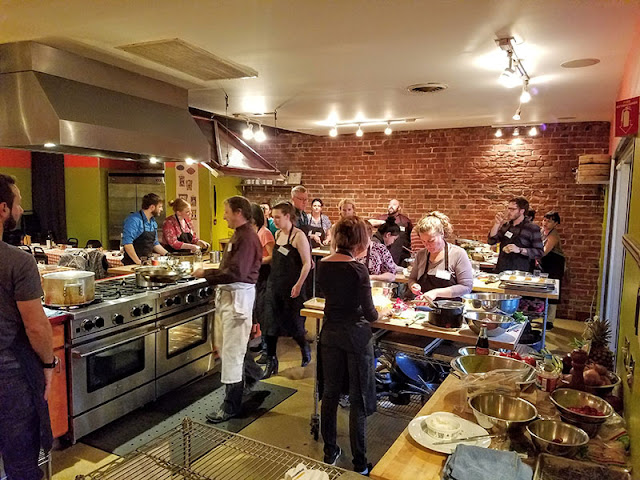
large-group-cooking-class-Kitchen on Fire

You don’t have to do the same tried and true Valentine’s Day date night or stay-in night. This year, try something new like a large group cooking class at Kitchen on Fire. Invite a friend, a lover, your office team, or go it alone and meet new people while creating and sharing a meal. Valentine’s Day is celebrated around the world in varying degrees, but at heart, it is the celebration of friendship.

How to Cook with Friends

Feasting, or gathering together in large groups for communal eating, has been around for centuries. Studies, like the University of Oxford’s Breaking Bread: the Functions of Social Eating, show the sharing of a meal with others increases social bonding and the feeling of wellbeing. Benefits include increased self-esteem, team building, and deeper interpersonal connections. Here are some ideas to bring everyone together.

Host a Pot Luck Dinner Party:

Who doesn’t love a potluck? A laid-back dinner party that lets everyone relax and enjoy good friends and good food. Pick a theme or let everyone bring their favorite dish. Or, suggest everyone bring Grandma’s favorite recipe. This is sure to spark some great childhood stories celebrating family. Set up a buffet table or food stations then allow your guests to move around and mingle.

Share the Love:

Invite a group of friends to volunteer at a food pantry or community kitchen, like Loaves & Fish. You and your friends will get to meet and interact with other volunteers and visitors. Instead of eating together, you will provide nourishment to others preparing and serving meals. The act of cooking, serving and eating with friends, volunteers, and visitors will make everyone feel happy and connected.

Host a Cook-off:

Add a little friendly competition to your large group cooking class this year. A cook-off is a great way to bring different groups of friends together to have fun while breaking the ice. The dish chosen can set the theme for the evening. A signature cocktail can complement the dishes. Guests can bring their own wine too and cook side-by-side in the kitchen. Judging can be a blind taste test or have guests introduce and describe the dishes. You know your friends best, so choose what will be the most fun for the whole group.

Make it a Team Effort:

Pick a recipe that makes a large quantity to share, like pasta sauce. Have your friends bring the ingredients, you supply the drinks, and everyone goes home with a delicious memory. Set up a designated spot for each task and let guests pick their work station. Teamwork always makes dicing and peeling more fun. Once you’ve finished cooking, invite your friends to sit and relax while enjoying a home-cooked meal. Don’t forget to send everyone home with a healthy portion to remember the night.

FEATURED CLASSES FOR VALENTINE’S WEEKEND

Rather venture out instead? This Valentine’s weekend, Kitchen on Fire, is offering multiple cooking classes to help you cook the perfect meal with friends.

Schedule of Classes 

Couples Valentine’s Dinner: Kitchen on Fire Chefs 
Berkley and Oakland
Friday, Feb. 14, 2020 | 6:30 PM | 3hr
Sat, Feb 15, 2020, additional class - Oakland
*Pescatarian option available

Bourbon and Brunch: Chef Diema 
Berkeley
Sat. February 15, 2020 | 12:00 PM | 3 hr

Cook Like a Restaurant Chef: Chef Mat Wertlieb
Oakland
Sun, Feb 16, 2020 | 5:00 PM | 3hr

Wednesday, February 12, 2020

What is the Montessori Work Period?

What is the Montessori Work Period?

What is the Montessori Work Period? - Montessori Elementary school - Montessori West

The uninterrupted work cycle is one question asked by many people who are new to Montessori preschool education. The concept is a crucial part of the Montessori Method and can be found in all schools accredited by the American Montessori Society. In fact, the existence of the uninterrupted work block is one of the key ways you can recognize an authentic Montessori school.

Defining the Work Cycle

Maria Montessori recognized that children learn at different paces and that longer work periods-- also known as work cycles-- were necessary for children to progress naturally. In the Montessori elementary school, this period is generally 2 to 3 hours long. The length of the work period will differ somewhat based on the age group in question because the long periods are often inappropriate for younger students. For these children, a 1 to 1 ½ hour work period is typically considered more beneficial.

Value of Uninterrupted Work Periods

Allowing children the opportunity to learn at their own pace is the rationale behind the Montessori work cycle. The idea is to provide each child with enough time to work on their projects and recognizes that some children require more time than others. Because of this difference in learning, the strict divisions of time adhered to by traditional educational systems often leave some children unable to complete their work before moving on to another subject or project.

Special Considerations

The usual work period also needs to be adjusted for some students, such as those with special needs. For these students, the schedule may be shorter or longer than for others and may include other considerations such as more one-to-one interaction between the student and their guides. The Montessori work period is a fundamental part of the Montessori Method. It provides children with ample time to explore concepts and produce more effective and accurate work results. It exists so that children are better able to absorb new information and work through problems at their own pace.

Saturday, February 8, 2020

Teaching Manners the Montessori Preschool Way

Teaching Manners the Montessori Preschool Way


Learning to be polite is taken as a matter of course at your Montessori preschool. The Montessori Method is based on a hands-on approach to educating the entire child from academics to social interaction, with grace and courtesy as basic foundations.

Grace and Courtesy

Learning to accept praise and constructive criticism helps Montessori preschool children understand why grace and courtesy are important. By displaying behavior that is socially acceptable parents and guides tailor grace and courtesy lessons to match the children and situation. A runny nose is an opportunity to demonstrate the use of a tissue, for example, and a potential dispute is perfect for learning about individual diplomacy, sharing, and exhibiting the behavior we want to experience.

Polite Social Interaction

From the mixed-age classrooms to the carefully chosen workstations, Montessori preschool children are encouraged to work together in order to achieve goals. Building the concept of teamwork and inclusion helps develop a healthy self-esteem and opens the door for constructive dialogue between kids and adults.

Provide Demonstration

Keep in mind that adults, especially parents, are the role models that children will imitate. When they see you interacting politely and getting favorable results, they learn that courtesy makes other people more inclined to help. Conversely, asking for help will be better received when the request is genuine than, for example, demanding a friend or adult to perform some task.

Observation and Example

Children learn to be graceful and courteous in their own time and their own way. By observing your children interacting with other people you will notice indicators that it is time to learn more about the process. Providing examples of when to say “please” and “thank you” should begin when your child is still an infant, and other social graces can be added as they become appropriate. The adults in a child’s life are the best instruction for displaying good manners. From washing your hands before dinner to farewells when you part company, how Montessori preschool children see adults and older kids behaving is how they will act themselves.

Monday, January 20, 2020

What to Cook When Cooking for a Crowd

What to Cook When Cooking for a Crowd

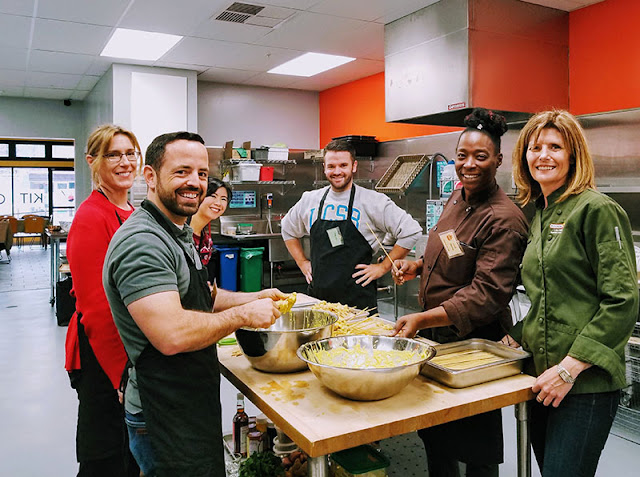
team building cooking class - Kitchen on Fire

Considering a large group cooking class for a special event? Or are your friends coming over for a feast? Cooking for a crowd can seem complicated but having easy to prepare recipes for such groups can make the tasks much more manageable. Here are some excellent recipes for large groups:

Pasta dishes

Pasta is a great and easy alternative when cooking for a crowd. It is not only an affordable base for your food, but most people also like it too. Also, when baked well, pasta dishes tend to hold up very well even if your guests don’t eat them immediately. The dish is very versatile and has various ingredient options. This technically means you can prepare different options of the plate every time you entertain a crowd to avoid monotony.

  • Lasagna: Use cheeses, layer noodles, and sauce to create your lasagna dish. Assemble it before the party starts and store it in your oven before the ‘gang’ arrives.
  • Macaroni and cheese: Start with the regular Mac and cheese. Put it in a slow cooker so that it stays warm as you set up toppings like ground beef, buffalo chicken, grilled chicken, pork, chilli, spicy sausage, and bacon. Then your visitors can scoop some mac and cheese and then top it with what they want.
  • Baked Ziti: Mix baked ziti with some sausage and pasta. Then blend that with some gooey cheese, and you have something that everybody can enjoy freely. Hold any spare pans in a warm oven, so that they don’t get cold.

Sandwiches

Sandwiches are another option when dealing with large groups. They are tasty, and everyone can personalize their dish to match their desire. You can opt for the regular meat sandwich or do hot sandwiches (a great idea, your guests will definitely love it).

Sandwich options:
  • Sausage sandwiches:
  • Pulled Pork:
  • Sloppy Joes:

Homemade Pizza

Prepare different types of pizza at home to appeal to different tastes. The best idea is to make cheese pizza and then add single topping pieces like pepperoni and sausage. Additional toppings like various types of cheeses and assorted cheese will also take your pizza a notch higher. Bake at least two pieces at a time to save time and then cut them into slices, so more guests can eat them while you bake the remaining ones. Assemble the pizza a few hours before the party starts and then store them in your fridge for easy baking. Also, pre-bake the crusts before you top them to save time.

Cooking With Large Crowd Tips

Choosing easy to cook recipes is just the first step in preparing food for large groups. There are more;

Plan the menu: Prior planning helps you shop for all the required ingredients and manage the preparation and cooking stages correctly. A team building cooking class in California can help you learn more about how to do with this.

Choose options that you are familiar with: You will have an easier time if you are preparing something that you already have an idea about. Chances of making mistakes with a new recipe are very high, so go for old favorites. You will be glad you did!

Prep Food: Do most of the work a day before the event. Making sauces, chopping ingredients, washing produce and peeling veggies are things you can do 24 hours earlier.

Go simple: Keep everything simple to minimize your stress levels. Large group cooking classes teach more on this along with knife skills.

Use slow cooker: It is an excellent tool for preparing dishes and keeping them warm. You can also keep meats, soups, appetizers, and dips in the device.

Accept help: Though it might feel awkward to accept help from large group cooking classes, and guests as well, then feel free to give them simple tasks here and there. This will help you work faster and minimize your stress load.

Wrapping it up

Still not sure of where to start or how to go about it? Large group cooking classes can also help. There are many large group cooking classes available in Oakland and Berkeley, CA. Now At the end of it all, when you throw a party or organize an important event, have fun! Enjoy the process, and you will have it easy. Of course, it may not seem like it is possible at first, but these tips can do the magic. The experience will be bliss once you crack it!

Friday, January 17, 2020

Why Preschool Education is Important for Your Child

Why Preschool Education is Important for Your Child

Montessori preschool - Fremont West


Quality Fremont Preschool Education: Insurance for Future Success

Every parent wants his or her child to be happy, accepted and capable. A quality preschool education is an important foundation toward meeting these goals. A preschool education will give your child the opportunity to:

  • Experience a constructive routine that leads to a positive attitude toward learning. 
  • Develop vocabulary skills in a wide variety of subject areas. 
  • Participate in activities that cultivate both large muscle coordination and fine motor skills. 
  • Learn information in new and interesting ways. 
  • Communicate with both adults and students as they participate in social interactions. 
  • Gain self-confidence in the ability to think and solve problems. 


It is well known that a child develops 85% of his or her intellect, personality and skills before the age of five. A quality preschool education stimulates your child's brain and allows it to develop to its full potential.

The benefits of a quality preschool education are immediate and also long lasting. Research shows that children who received early learning demonstrated increased intellectual development, improved health and positive behaviors. The Brookings Institute on Children and Family documented that children with early childhood education also showed improvement in later years. This included higher graduation rates, less need for special education classes and fewer incidents of criminal behavior. A Rutgers University professor emphasized it this way, "for many children, preschool programs can mean the difference between failing and passing, regular or special education, staying out of trouble or becoming involved in crime and delinquency, dropping out or graduating from high school."

You have the change to share a constructive experience with your child. As a supportive, involved preschool parent you are making a commitment to your child's future. Your child's preschool education will give him or her a great start in life-long skills-- reading, thinking, interacting, problem solving and language. This is the best insurance for your child's future success.

Montessori Children’s House, a Fremont preschool, has provided exceptional education to preschool children since 1998. Their teachers are dedicated to planting life long seeds of learning. Montessori Education focuses on eight traits: independence, confidence, self-discipline, intrinsic motivation, acute sensory perception, academic achievement, spiritual awareness and responsible citizenship. For more information about the program, contact Montessori Children’s House.

References: 
Barnett, Steven W. "Long-Term Effects of Early Childhood Programs on Cognitive and School Outcomes,"(http://futureofchildren.org/futureofchildren/publications/docs/05_03_01.pdf).

Isaacs, Julia B. and Emily Roessel. "Impacts of Early Childhood Programs." ( http://www.brookings.edu/research/papers/2008/09/early-programs-isaacs).